Category Archives: Processes

Nude Numbers (#23)

Summary

It’s been a while, but I have now adjusted my tracking stuff for my new 2008 goals. I’ve just posted them, or you can look at the Objective Data portion for more information. Also big changes in presentation this week – please let me know if you have trouble viewing or understanding the data.

Subjective Data

Last week was really the first week on my new plan. I had planned to start the week of 11/11, but I got dog-sick that week and then hurt my calf returning to lifting the week after and decided to completely rest until all pain was gone. This week was a hard start. I’m switching to lifting three days a week for 60-90 minutes, as opposed to my prior 5-6 days at 30 minutes. And you know what, it’s exhausting!

Also, I’m finding swimming to be exhausting. My kick is nonexistent.

Objective Data

Blue lines == actuals; Gray areas == my target range for that week.

Assessment

This was a good start. I skimped on spinning but that was due to schedule more than anything else. I need to watch how quickly I gain weight – I’m eating OK but not great (a few too many cookies now that I’m trying to gain weight).

My swimming is pretty bad, and my kick actually moves me in the wrong direction, so I need to adjust that.

Plan

The major change for next week is I’m going to find and work with a swimming instructor for a few weeks to get my kick going. Otherwise, keep to plan.

Presentation Notes

I did a major rework of my dashboard for my winter goals, and hopefully to make it easier to see at a glance where I am. For example, if you look above you can quickly see I was “out of target” for spinning last week.

Lastly, these notes are always presented in SOAP Note format.

– Art

Help me raise money for people suffering from cancer

Growing Individuals: Be the Sandman

(4c of 5 in The Rules of Naked Management)

Two weeks ago I talked about the first rule of growing people on your team: get over yourself! Assuming you’ve done that, the next step is to Be the Sandman…

Cathedrals of the Mind

So your employee holds the key to growing their own career. If so, why the hell do we need managers involved?

Well, let’s revisit the process involved in getting something done:

  1. Daydream: Form a vision of what you want do.
  2. Be Lazy: Come up with one small step that moves you closer.
  3. Look at the Negative: Look at the opportunity cost of that step, and if it’s too large, go back to step 2.

Then, TAKE THE STEP!

In career growth therefore, the first thing you need to do is form a vision, a dream if you would, of where you eventually want to get to. It can be grandiose (“I will be the CEO of a fortune 500 company”). It can be noble (“I will create and run a charity that serves the needs of the homeless in Seattle”). It can be very specific (“I will be the Director of Strategic Projects within 2 years”). It can even by very vague (“I want to build something that is larger than just myself”), but it’ll need to get more specific over time. The most important thing though is to have that dream and to believe you’re going to achieve it. Every great achievement of mankind started as a dream, and so everyone who wants to be great needs a dream:

“A rock pile ceases to be a rock pile the moment a single man contemplates it, bearing within him the image of a cathedral.” -Antoine de Saint-Exupéry, Flight to Arras, 1942

If your employee doesn’t have a dream of where they want to get to, then all the training, all the mentoring, and all the experience in the world is for naught; it’s just passing time.

Enter the Sandman

Now, why are managers needed? Because left to their own devices most people will never follow the process above. Sure, they know they need to follow it. But they also know they need to rebalance their portfolios, get that annual physical, and have their teeth cleaned.

Most people are incredibly frightened by the concept of looking internally, finding a dream, and then communicating it to the world. So they procrastinate.

But as a manager you have one power that applies here; you can force someone to do something, and fire them if they fail to do it (harsh I know, but ultimately that’s the only hard-power managers have). And in growing careers, that’s what you need to do.

Your job is to force your employees to think hard and articulate where they want to take their careers; in other words, you must be the Sandman and force them to dream.

Becoming Morpheus

The concrete step here is simple: make sure every one of your employees has clearly articulated to you their dream for where they want their career to be in five to ten years. Write it down if that helps you, but the key is that the employee (not you) articulated it, and he or she can recall it at a moment without referring to some bullshit document (so don’t just follow the HR plan).

This will be easy with some employees – they will have firm dreams already ensconced in their minds that you just need to extract from them. For others though, you’re going to have to force them to do a lot of work. The good news is pretty much everyone has a dream; you just have to get it out of them.

People have lots of different ways of doing it, but here are some of the techniques that have worked for me.

  1. Listen, don’t direct. This goes back to “get over yourself”, but when you have conversations with your employees about where they want to grow their careers, make sure you spend most of the time listening. Don’t be afraid of silences – make them break the silence.
  2. Ask open-ended questions. Don’t ask “do you want to be a CEO?” But also don’t ask “what job do you want to have in ten years?”: I have no idea what my job will be ten years from now; how can I expect my employees to know? Instead ask “what are the qualities you want to have in your job ten years from now” (I do know the qualities I want in my job 10 years from now)? Or “what types of things do you want to do in your job ten years from now? (I know the answer to that too; I’ll bet you know your answers as well).”
  3. Encourage made-up titles. I’ve found this one to be very useful. Once I’ve asked a bunch of open ended questions about the qualities they want in a job, I ask the employee to make up a title for that job. Sometimes they pick “CEO” or “CTO”, but more often than not they pick something way more personal to them. I once had someone pick “Director of Special Projects”, and another person pick “Judge.” I’ve found that when someone picks a name for their set of job qualities, it makes it more real for them and more memorable!
  4. Ask them what are the differences between themselves today, and the person who holds the title they made up. This is useful to find the gaps and also to give some ideas of the types of steps they should take to get to their goal. For the person who told me “Judge”, he rightly pointed out he didn’t have a law degree (any guesses what his next step was)? For the person who told me “Director of Special Projects” he told me he hadn’t really worked on a special project to date, so the goal became getting him assigned to a more important project with trickier technology.
  5. Be persistent. Every time you meet with an employee who is uncertain of their dream, ask them how it is coming. When they have made no progress, be harsh. Give them deliverables if that works with them. But never give up on this – without a dream, they will not take their career anywhere!

Stop Dreaming

Once you have a dream that is articulated, with some gaps identified between the employee today and the employee of the future, it’s time to move onto the next two steps: being lazy, and looking at the negative.

Being lazy is usually quite easy once you have a dream: you ask the employee to come up with some ideas of steps they could take within your organization that moves them closer to their dream. This is a time where you can seed them with ideas, but try to make them come up with ideas first – you’ll be surprised by the results.

But “looking at the negative”, well that deserves its own topic which I’ll cover soon.

– Art

Growing Individuals: Get Over Yourself

(4b of 5 in The Rules of Naked Management)

Last week I talked about my general framework for why you need to make sure team members grow in their roles. This week I’ll go through some of the techniques I use.

Self-Importance

Before I talk about people on your team, let’s talk about you. Who has been the most important person in your career to-date? Who has had the most influence on what you’ve done and what jobs you’ve taken? Whose advice have you followed the most? Who’s been your best ally and who have you asked for the most input on career directions?

Without a doubt I’ve been the most influential person on my career (and not always in a good way). Sure I’ve had mentors who’ve suggested paths, but often I’ve ignored their advice – but I’ve never ignored myself.

Who’s the second most influential person? For me, that’s my wife. She’s listened to my cheers, my complaints, my dreams and my plans. She’s pushed me to take certain directions and (assuming I’ve agreed) I’ve favored her advice over anyone else’s.

Who’s the third most important? For me, it’s been my friends and peers. I’ve compared myself to where they’ve taken their careers. I’ve kvetched with them about my plans, my frustrations, and my dreams. I’ve done it at work, but also over dinner, out hiking, heck, anywhere my friends gather. We often talk about work and their stories about their careers definitely influences where I want to take mine.

In fact, you have to get pretty far down the list before one my mentors shows up. That’s not to say mentors aren’t important – they are critical and I’ve had some absolutely stellar mentors. But in reality I pay way more attention to me, my spouse, and my friends.

And I’m typical of most employees.

Get Over Yourself

First time managers often think they should take a very active role in growing their employees (or at least I did), and can find themselves devoting lots of time to it. It leads to things like career maps, ladder-levels, “mandatory training”, soul-searching on weekends about how you can improve individuals on your team, giving constant “constructive” feedback about ways to “grow”, and often leads to frustration on the part of both the manager on the employee. The manager thinks the employee is ignoring good advice. The employee thinks the manager is pushing some bullshit agenda on them that isn’t where they want to go. Eventually both manager and employee abdicate any responsibility for career growth, and instead talk (in bitter sarcastic terms) about following bullshit processes – and that’s the best outcome.

The manager is at fault here – the employee is following the advice of more important people, and the manager mistakenly thinks his advice should come first.

Given that, the first rule of growing individuals is: get over yourself. At best as a manager you are the 4th or 5th most important person advising your employee on their career (assuming most of your employees have at least 3-4 friends). Your advice, especially your unsolicited advice, is likely to be in competition with more important people and therefore not followed.

So stop giving it!

Instead focus your management powers on managing your employee’s relationship with their most important advisor – themselves. Make sure they are asking themselves where they want to go, make sure they are following the advice they lay out on their own, and only step in to help with the how when asked.

Once you do this, the amount of time you spend on “growing individuals” drops drastically, but the quality of the interaction increases drastically. You become the person an employee reports their career-growth progress to, not the person actually taking the steps to grow their career. The employee takes more ownership because it’s their own steps. You can put metrics around how they take their steps and hold them accountable. And you’ve delegated responsibility for growing the employee to the most qualified person imaginable – your employee.

The next few articles will talk about the 4 remaining steps I do to grow someone’s career, but the most important of them is the first: get over yourself. You’re not as important as you think you are, so spend the amount of time commensurate with your importance.

I’ll continue the rest the week after next

– Art

Nude Numbers (#19)

For reference, here’s last week’s data. Curious what this post is about? I’m tracking my training progress for the New York Marathon. Click here for why.

Summary

I did one “last chance” run to see if my leg could take the mileage on Saturday. Results: 17 mile run, but I’m in a lot of pain now and back in my restraining-boot. So, I need to make a hard call by end of this week: surrender and fight another day, or go for broke in two weeks? Send me your thoughts!

Subjective Data

This was a rest week which was good since I had a slight cold. I did two spinning classes, no weight lifting, but my bike ride on Saturday didn’t pan out. So, instead I decided to try my luck running again (stupid me, I know). The good news is I got 17 miles done in 3:03:00 (although I had to walk the last mile). The bad news is, like my run 2 weeks ago, I’m in a lot of pain.

That said, I’m in slightly less pain than 2 weeks ago even though I did over 2x the mileage… hmmm…

Eating was very on target all week, and the numbers show that.

Objective Data

Click here for a PDF version of my dashboard.

Assessment

The rest was good. The diet-control was good. On that front, not a lot to change.

On the run, I learned a bunch of things:

  1. Going at a super slow pace actually makes things worse, not better. I did the first 4 miles at a 12-minute-mile pace and it really sucked. I need to run at my natural pace, which means a 9-10 minute mile pace with breaks.
  2. Tighter laces earlier in the run actually seems to help.
  3. I need to stop every 1-2 miles and walk for at least 60 seconds to let the pain subside (that’s what kills my overall times). If I do the marathon, that’s what I’ll need to do.
  4. It hurts more if I stop moving J
  5. But it hurts A LOT while I run. Specifically, sharp piercing pain on the top of my right foot when kicking off that is consistent with severe tendonitis.

Plan

This is the week I need to make my big decision: to go or not go for it. I have to decide by Friday, although I’m hoping to stretch it to Sunday since I’m having breakfast with my aunt from Ireland on Sunday and she’s run a bunch of marathon’s before (I’d like her advice).

The plan this week is to resume lifting on my old schedule, keep eating under control (still shooting for that Six-Pack Challenge), and do some spinning to maintain cardio (later in week once my foot heals from Saturday’s run).

As a reminder, I get to decide on October 24th whether to try to run the marathon anyway, or take my guaranteed spot next year. Let me know your thoughts.

I’ve decided my final goals for the winter will be all about swimming and lifting:

  1. Be able to swim 1km without stopping by 3/1/08. This is really about form and balance for me.
  2. Gain 5-10 pounds from my 11/5/07 weight while keeping a 32 inch max waist by 3/1/08 (I’m expecting my 11/5 weight to be around 150-155).
  3. For weight lifting, increase my 1RM by 5% on average across the board by 3/1/08 from my 10/30 1RMs (1RM = 1-Rep-Maximum. I did a re-measure of those 2 weeks ago).

I’ll create a new tracking dashboard for this after the marathon.

Presentation Notes

No changes to data presentation this week. As with last week, data is presented in SOAP Note format.

– Art

Help me raise money for people suffering from cancer

The Rules for Growing Individuals

(4a of 5 in The Rules of Naked Management)

Last week I talked about how to use your entire Naked Team to hire new people. This week I talk about how to why you also need to grow the members of your team.
Farming

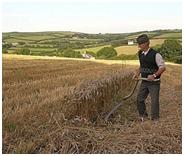
I recently finished The Omnivore’s Dilemma(1), a book about how the food we eat is produced. There is a section in the book that details a “healthy” farm called Polyface based in Virginia. Polyface uses the natural tendencies of nature to create a farm that produces some of the best eggs, beef, chicken and produce of any farm in the country. This form of farming, in particular its reliance on harnessing the innate tendencies and cycles of crops and animals, is very similar to managing a Naked Team. Managing Naked Teams is all about recognizing what natural energies motivate most people, and using transparency to channel that natural energy towards your team’s goal.

But it’s an imperfect analogy: While growing and running naked teams your team will quickly gain momentum, your people will get more and more confident and your stars will start realizing they can do even more. Like a successful crop on a farm left unattended, your team will start expanding outside its area (or at least want to). Your star employees will want to take on new challenges. The same thing happens on a farm but the good farmer harvests his crops right before things start getting overcrowded and thereby keeps a stable healthy system running.

Unlike a farm, it’s generally frowned upon if you harvest or cull your team to keep it at a stable level.

Harvesting

Here’s the problem: The consequences of not harvesting your team are just as serious as not harvesting on a farm. On an un-harvested farm, crops overcrowd themselves and start dying. Some aggressive crops spread into other areas (like weeds). And disease spreads rapidly in the confined and overcrowded herds. On a team that is running naked but needs to expand outside its area to keep everyone growing, either some team members quit out of frustration at not being able to keep moving in their careers (the best case situation), or they resign themselves to immobility, get bitter, and poison the team (the worst case).

How do you solve that problem? You do two things, one obvious and the other not so obvious.

On the obvious front, you weed your teams, removing the poisonous attitudes and the folks who don’t believe in the strategy you’re following. Get rid of them and quickly! That’s all I’ll say on that.

But on the non obvious front, you must ignore the natural instinct of most managers and instead, you actively harvest the best from your team.

This is the last step to running naked teams. First you focus on the team itself; then you use the team to help add more people to the team; and finally you aggressively grow and remove the stars on your team to keep your “crops” rotated and your harvests high.

The Joy of Farming

Harvesting your team, or actively removing your best team members and replacing them with new team members, is one of the most powerful tools in your bag of manager tricks. If you do it, you get the following benefits:

  1. You get to control the timing and attitude of when your stars leave. That’s right; your stars are going to leave anyway because they want to keep growing, but if you focus on moving them, you get much more control over when that happens.
  2. You force your team to be more resilient and less dependent upon 1-2 key people. Once the star leaves, you have to train other (up and comers) to do the job. If you’re regularly recycling your top team members it’s easy to convince your stars to maintain transition materials as a condition of your help. And it keeps your focus on training and recruitment which means you think more about the “how” you do things than “what” you do, which increases resilience.
  3. You increase morale on your team. When your team sees (through your actions) that you’re actively pushing and promoting the stars, they feel more loyalty to you because they’ve seen your results, and they feel better about the team because they know they’ll move on. They may not be stars yet, but you’ve given them the best possible reason to try: you’ll promote them off the team if they achieve it.
  4. You raise the execution level of your entire team. This one is less obvious, but I’ve found that when a high-performing star leaves, especially one who has been on the team for a long term, there is a period of pain (usually 3 months) as people start to fill the hole, but then the team starts executing better than when the star was there. Why? Because folks who you never let try something new when the star was on your team, now try new things. They have the knowledge of seeing what the star did, but they try new evolutions on that theme because they are new people. And after 3-months they’ve either returned to exactly what the star did (because the pain is too high if they don’t), or their mutation on the star’s way of doing things is actually better. Ergo your team gets better, not worse.

Most management tool books tell you to get rid of poisonous team members (which I echo) but to do everything in your power to keep your stars. I disagree. Do everything you can to promote your stars into new roles. It’s true that it does come at a cost; usually for me 3 months of pain as the team adjusts to life without a promoted star. But I’ve been on excellent teams that didn’t harvest their stars, and the consequence was always a team that ended up bitter, ineffective, and full of hubris about how good they were (anyone else have the same experience?). Three months of pain is nothing compared to years of snarky bitter old-timers.

Don’t’ get me wrong; I’m not advocating that you get rid of all your stars tomorrow. Instead I’m advocating that you plan and actively push out your stars on a schedule that your organization can maintain, but never let a year go by without losing one star!

The Rules of Farming

So assuming I’ve convinced you that focusing on growing the individuals on your team, in particular the stars, is worth your while, How do you do it and still get your day job done? The good news is that most first time managers actually spend far more time on employee growth than they should(2).

I have found a way that for me has been very effective, but also very efficient on my time. It consists of the following rules:

  1. Get Over Yourself
  2. Be the Sandman
  3. Remember Michael Jordan
  4. Crack the Whip
  5. Fire Your Stars

I’ll explain next week

– Art

(1) It was highly recommended by several people I respect, and it’s a good read. I really hadn’t appreciated the importance of corn to my diet before. My biggest issue with the book is its descriptions of life on Polyface farm, a healthy farm in Virginia. I know from firsthand experience what it takes to keep a farm like Polyface going; due to the nature of farming in rural Ireland in the 70’s and 80’s, most farms ran de-facto healthy with crop rotation, multiple types of livestock, and self-sustaining fertilizing (i.e. manure) – artificial fertilizers didn’t become prevalent until the mid 80’s. I grew up on such a farm. Pollan’s view of Polyface doesn’t suggest it’s easy work, but the style of the writing certainly romanticizes the work, skimps on details of exactly how taxing the labor is, and suggests those who choose not to enter the field are morally and spiritually inferior to those who do engage in the work. It’s certainly within his rights to advance his thesis this way, but it makes me question the other parts of his thesis as well; what details that might make his thesis less strong did he omit? Are there positives to the corn-based-us-ecology that he left out? Who knows? It’s a popular book, not a doctoral thesis, so you get what you pay for. Despite all that, I will continue the chain of recommendations and recommend that people read this book if they would like a good non-fiction read for the winter. Definitely food for thought.

(2) This is partially because of good intentioned HR policies like developing career maps. First time managers often want to do such a good job with their first employees that they actually create full career maps. There are few better examples of complete wastes of time in the history of management. The actual HR policy is well intentioned (it’s that managers need to spend some time on growing their employees), and HR departments recognize that most managers don’t do it on their own, but the one-size-fits-all approach leads to just bullshit paperwork. But the main reason first time managers spend too much time on this is because they break the first rule of growing individuals: they have not gotten over themselves.